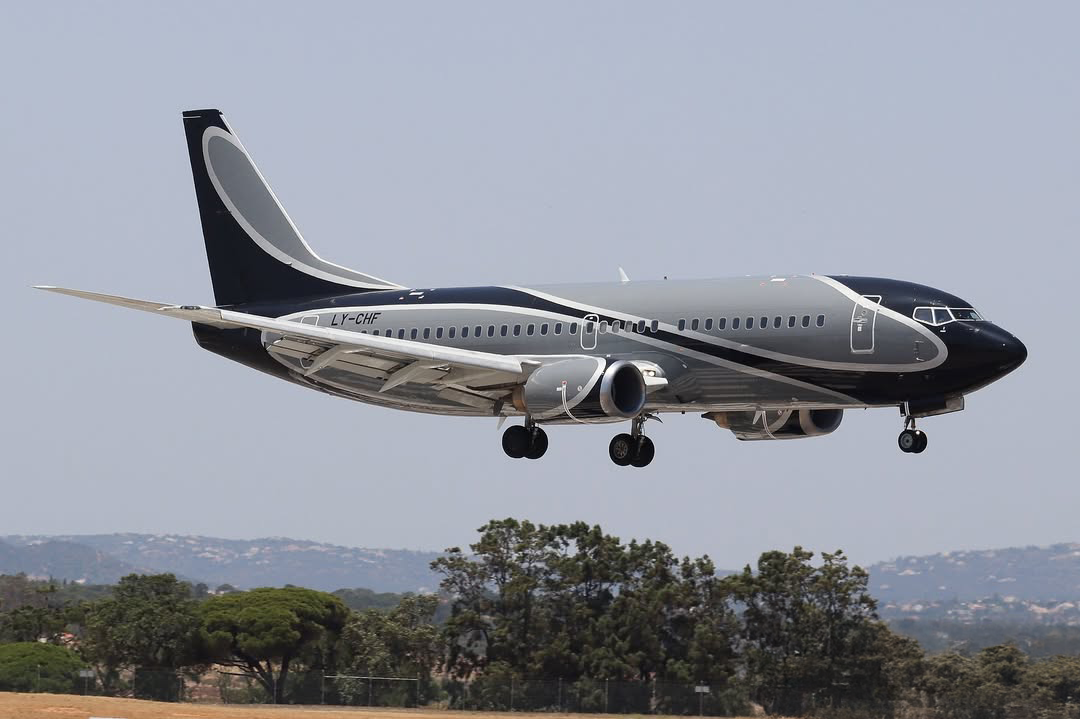
From slow start to steady climb: What’s driving EMEA’s VIP charter recovery in 2026
 For the VIP charter segment in EMEA, the first half of 2026 was marked by geopolitical instability redrawing long-established routes, newcomers turning to private travel for the first time, and a shift from aircraft ownership toward fractional models and chartered flights. According to Marton Modis, CCO, VIP Operations at KlasJet, the summer season’s slow start had another clear cause: the 2026 FIFA World Cup, hosted in North America rather than Europe.
“This summer is shaping up to be similar to last year, though it started more slowly – the World Cup pushed football summer camps later in the calendar, and the volatile fuel situation held things back even further,” Marton Modis says.
The World Cup effect
Staged across the US, Canada and Mexico through June and July, the World Cup had an outsized impact on private jet movement in North America. As the tournament opened, market intelligence and data analytics provider WINGX recorded sharp surges at host-city airports – Seattle roughly doubled its normal daily traffic around its opening group match, and Mexico City ran about 1.7 times its baseline for the tournament opener. The divergence with Europe was just as clear in the monthly figures: North American business-aviation activity rose 2.2% year-on-year in June and was forecast to climb 4.3% in July as the tournament reached its climax, while Europe stayed essentially flat – up just 0.1% in June according to ARGUS TRAQPak data.
With European clubs’ pre-season camps rescheduled around the tournament and football-related charter demand pulled toward the US, operators across the continent spent June and early July waiting for the market to find its usual rhythm. “By the time we look back on the full season, flight hours should land around the same level as last year, chiefly because demand is now picking up fast,” Modis adds.
Price transparency becomes non-negotiable
If there is another trend that defines 2026, it is the clients’ appetite for certainty. “Clients need more flexibility than ever, from first inquiry to wheels-up,” Modis notes. “They expect full transparency and no surprises, even amid market volatility.” This expectation has changed the negotiation process, with clients scrutinizing what's included in a quote far more closely, and showing little patience for costs that surface later.
One noticeable change has been a drop in last-minute bookings compared to 2025. “We’re noticing fewer last-minute requests than we did last year, mainly because there are more aircraft available in the market and demand is a bit lower than it was in 2025,” Modis explains. Sports charters, however, remain an exception to this trend. As European competitions heat up, KlasJet is seeing a high volume of time-critical requests, particularly from football clubs, who are willing to pay a premium to ensure their teams arrive at qualifier fixtures rested and in the best possible shape.
He also notes the change in the client base. In the last year, VIP charter operators have welcomed a surge of first-time flyers along with returning customers – a clear sign that private charters are attracting those who might have previously opted for commercial or business-class seats.
Reading the fuel gauge on every deal
Fuel volatility has defined the year. Following the closure of the Strait of Hormuz early in 2026, jet fuel climbed above USD 200 a barrel according to IATA data. The clearest effect of fuel price spikes on the charter market, though, may be indirect. As fuel costs climbed and commercial carriers cut routes and delayed schedules – with airlines across Europe warning of widespread cancellations and billions in added fuel costs – a fresh wave of clients turned to chartering, not for luxury, Modis says, but for certainty.
“Because of everything happening with fuel prices and commercial schedules, we’ve seen organizations that would normally fly commercial come to us instead,” he explains. “It isn’t really about price or comfort but about knowing they’ll get where they need to be, when they need to be there.”
Repeat clients, meanwhile, have mostly become more price-conscious rather than trading down on aircraft type or cutting trips. “This summer, there’s a clear trend toward conservative pricing, with clients shopping harder for the best rate. Given the global uncertainty, that’s understandable,” Modis says.
The map is shifting east
According to Modis, routes have remained largely consistent since 2025, with one notable shift: the Middle East has seen a decline in popularity as a destination this year, reflecting the airspace concerns that have been highlighted throughout the industry.
The drop has been steep – at the height of the regional conflict, WINGX recorded private flight activity in the Middle East falling by close to a third year-on-year, and the region has stayed well below its pre-conflict baseline since. Meanwhile, Central and Eastern Europe, particularly Poland, has emerged as a bright spot for KlasJet’s fleet this summer, attracting new clients in a region that hasn’t typically been in the spotlight for VIP charters.
Looking to the second half of the year, the expectation across the market is for demand to hold rather than soften. Modis expects Q3 and Q4 2026 to outpace the same period last year, largely because some travel originally planned for early in the year was pushed back due to regional instability. “As the region stabilizes, music tours and private group charters are starting to come back – we’re already seeing it happen,” he says.
For its part, KlasJet is using the momentum to look outward: the company plans to reposition one of its aircraft to the Asia-Pacific region from September, testing demand in a market it has not historically served.